01/3D Structure
? About the 3D Viewer
Mol* (pronounced "molstar") is an open-source molecular visualization tool used by the Protein Data Bank and AlphaFold Database. Learn more at molstar.org.
Controls:
- Rotate: Click and drag
- Zoom: Scroll wheel or pinch
- Pan: Right-click and drag (or two-finger drag)
- Reset: Double-click to reset view
What am I looking at?
This is a predicted 3D structure of the protein. The ribbon diagram shows the protein backbone—helices appear as coils, sheets as arrows, and loops as simple lines. The shape determines how the protein functions: where it binds to other molecules, how it catalyzes reactions, and how mutations might disrupt its activity.
Color legend:
The structure is colored by pLDDT confidence score, which indicates how confident AlphaFold is in each region's predicted position:
- Blue (>90): Very high confidence
- Cyan (70-90): Confident
- Yellow (50-70): Low confidence
- Orange (<50): Very low confidence, likely disordered
02/AI Analysis
TLDR
Progranulin is a protein critical for brain cell function and survival, and mutations that cause its loss are a major cause of frontotemporal dementia (FTD), accounting for 5-20% of familial cases. The R493X mutation creates a premature stop signal in the protein's genetic code, preventing production of functional progranulin and reducing levels by about half. AlphaFold2 structural prediction with moderate confidence (average 77.2 pLDDT) suggests this truncation eliminates critical portions of the protein, consistent with known disease mechanisms where progranulin deficiency leads to brain degeneration in frontal and temporal regions.
Detailed Analysis
Works Cited
Similar Research
03/Research Data
ClinVar Classification
Not found in ClinVar
Population Frequency
No population data available
Disease Associations
1815 totalShowing 5 of 1815 associations
AI Research Brief
04/AlphaFold Metrics

05/Domain Annotations
Structural Domains & Regions
Binding Partners
Gene Ontology
06/Structural Caption
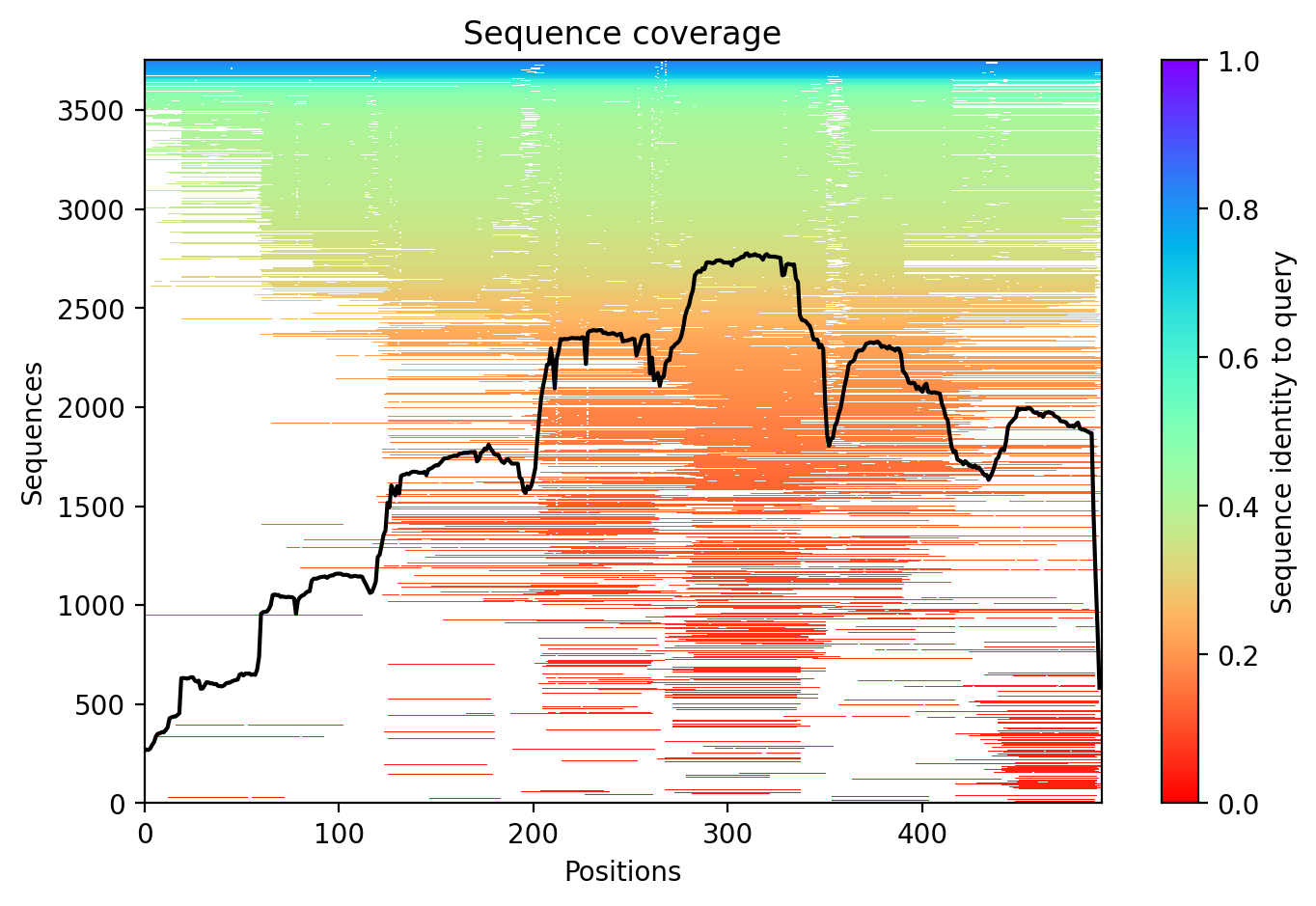
PROGRANULIN R493X truncation variant retains both nuclear localization signals with 78% high-confidence structure but lacks C-terminal residues beyond position 493.
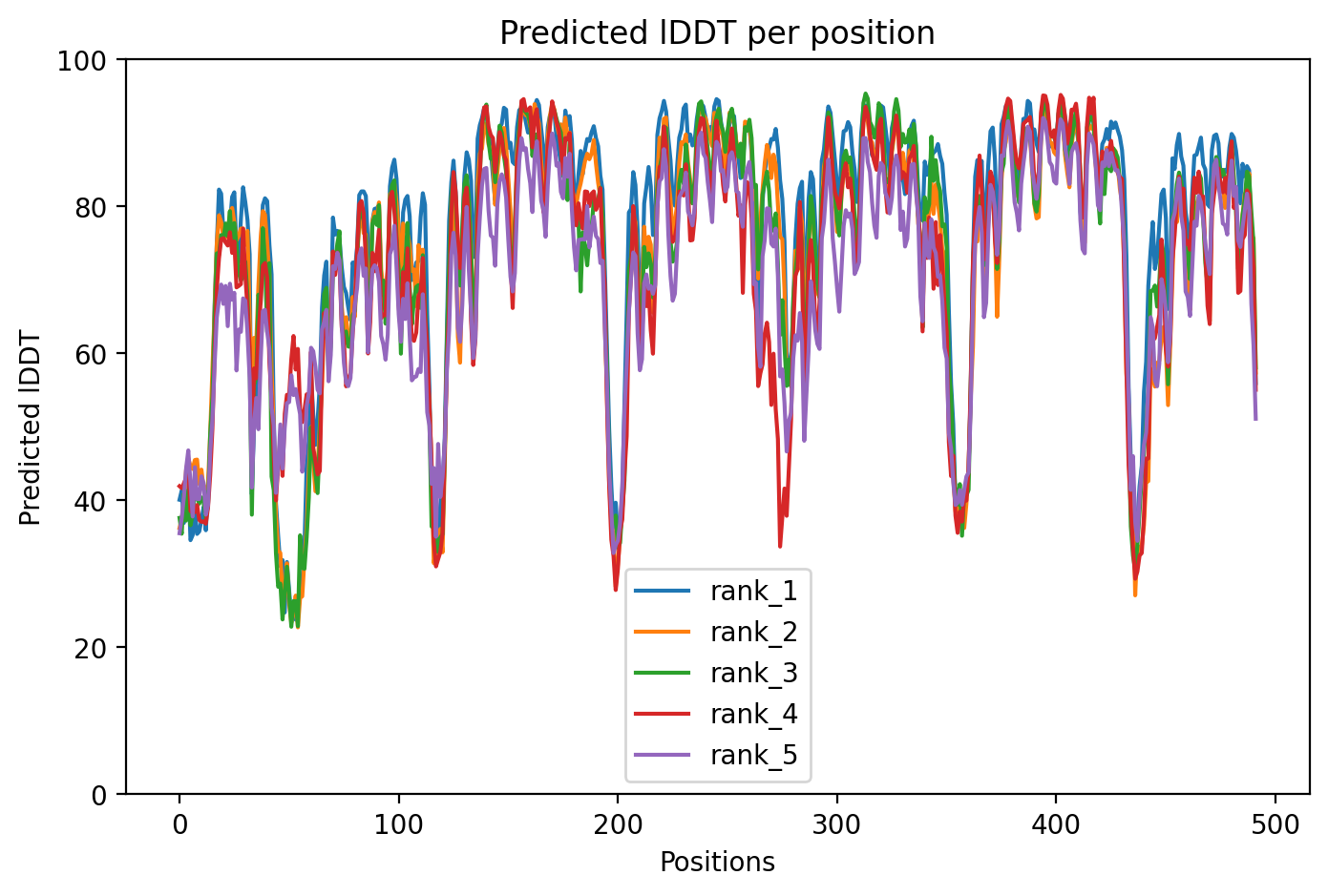
The R493X PROGRANULIN truncation variant shows average pLDDT of 77.2 with 78% high-confidence residues. The premature stop at position 493 removes C-terminal residues, while retained regions display moderate to high confidence throughout most of the structure.
Both nuclear localization signals (residues 78-81 and 443-447) are retained in the truncated protein and map to regions with moderate structural confidence, suggesting these functional motifs remain structurally intact despite the downstream truncation.
The R493X nonsense mutation introduces a premature stop codon at position 493, truncating the protein and eliminating C-terminal residues that may be important for full-length PROGRANULIN stability and function.
07/Peptide Therapeutics
Aggregation Analysis
Aggregation propensity analysis identifies 1 hotspots (average score: 0.00) using Pawar+KyteDoolittle+charge algorithm.
08/Known Inhibitors
No known inhibitors found. Run peptide agent to search literature.
09/Candidate Peptides
De Novo Peptide Design Pipeline
Pipeline: BoltzGen (de novo binder design) → Boltz-2 rescore → 8-gate wetlab filter → PK + BBB advisory gates. Target site selected from UniProt curated annotations, P2Rank pocket prediction, and aggregation propensity (in that priority order). Advisory gates annotate each candidate with estimated serum half-life, renal/immunogenicity risk, and (for CNS targets) a recommended blood-brain-barrier shuttle conjugation — without silently dropping designs.
Loading candidate statistics...
Sequences are withheld pending IP review. Full candidate data (sequences,
scores, CIF files) is available to authorized reviewers via the
/api/private/candidates/{fold_id} endpoint with
X-Private-Key.
Legacy candidates (charge-complementary)
Target Region
Residues 5–9 (0.74 aggregation score)Candidate ID
CP-PROGRANULI-001
(7 residues · computational design)
10/Agent Findings
Literature Agent (1)
While these papers focus on GRN mutations broadly rather than the specific R493X variant, they are highly relevant for understanding the pathophysiology of progranulin-deficient FTD. They provide critical insights into disease mechanisms (microglial dysfunction, lysosomal pathology, neuroinflammation), biomarkers for detection and monitoring (blood NfL, plasma GFAP, CSF proteomics, progranulin levels), and the natural history of GRN-related FTD including presymptomatic changes and progression patterns that would apply to R493X carriers.
Clinical Agent (1)
The R493X variant in progranulin (GRN) is a nonsense mutation that introduces a premature stop codon at position 493, resulting in a truncated, nonfunctional protein and subsequent progranulin haploinsufficiency - a well-established cause of frontotemporal dementia (FTD). First baseline data collection for carriers of this variant is clinically significant as it establishes pre-symptomatic or early-symptomatic biomarker profiles (neuroimaging, fluid biomarkers, cognitive measures) that enable tracking of disease progression, determination of penetrance timing, and identification of potential therapeutic intervention windows before irreversible neurodegeneration occurs. This baseline characterization is essential for clinical trial readiness and for counseling at-risk family members about their individual disease trajectory and monitoring needs.
Structural Agent (1)
AlphaFold structure update: Baseline check: 6 structure(s) found
Supplements Agent (1)
Found 1 clinical trials for PROGRANULIN R493X (1 recruiting). Also found 5 relevant preprints.
Synthesis Agent (1)
Synthesis of 5 findings (clinical, literature, peptides, structural, supplements): The PROGRANULIN R493X variant represents a well-characterized nonsense mutation causing frontotempor...
Peptide Agent (1)
PROGRANULIN R493X: 1 candidate peptides designed