← Back to Folds

APP V717F

↓ Download Report
V717F Alzheimer's disease P05067 July 18, 2026
Average Confidence: 66.6%

01/3D Structure

📱 For the best experience, view 3D structures on a desktop computer.
? About the 3D Viewer

Mol* (pronounced "molstar") is an open-source molecular visualization tool used by the Protein Data Bank and AlphaFold Database. Learn more at molstar.org.

Controls:

  • Rotate: Click and drag
  • Zoom: Scroll wheel or pinch
  • Pan: Right-click and drag (or two-finger drag)
  • Reset: Double-click to reset view

What am I looking at?

This is a predicted 3D structure of the protein. The ribbon diagram shows the protein backbone—helices appear as coils, sheets as arrows, and loops as simple lines. The shape determines how the protein functions: where it binds to other molecules, how it catalyzes reactions, and how mutations might disrupt its activity.

Color legend:

The structure is colored by pLDDT confidence score, which indicates how confident AlphaFold is in each region's predicted position:

  • Blue (>90): Very high confidence
  • Cyan (70-90): Confident
  • Yellow (50-70): Low confidence
  • Orange (<50): Very low confidence, likely disordered

02/AI Analysis

TLDR

The APP V717F mutation causes familial early-onset Alzheimer's disease by altering how amyloid precursor protein (APP) is cleaved, leading to increased production of toxic amyloid-beta peptides that form brain plaques. This AlphaFold2 structure prediction has moderate confidence (pLDDT 66.6), indicating uncertainty in the predicted three-dimensional arrangement of protein atoms. The relatively low confidence score limits structural interpretation, though the mutation's location near the gamma-secretase cleavage site is consistent with known disease mechanisms.

Detailed Analysis

Amyloid precursor protein (APP) is a transmembrane protein that undergoes sequential cleavage by beta-secretase and gamma-secretase enzymes to produce amyloid-beta (Abeta) peptides [3]. The V717F mutation is located at position 717 within APP, directly adjacent to the gamma-secretase cleavage site. This mutation causes familial early-onset Alzheimer's disease by altering the precision of gamma-secretase cutting, shifting production toward longer, more aggregation-prone Abeta species like Abeta42 instead of shorter, less toxic forms [3]. The V717F variant has been identified in genetic studies of Alzheimer's disease families, confirming its pathogenic role [1]. The AlphaFold2 structure prediction for APP V717F yielded an average confidence score (pLDDT) of 66.6, which falls below the threshold typically considered reliable for detailed structural analysis (pLDDT >70). This moderate confidence indicates substantial uncertainty in the predicted atomic coordinates and spatial arrangement of protein regions. Without high-confidence structural data, it is not possible to make definitive claims about how the phenylalanine substitution (replacing valine) specifically alters local protein geometry or enzyme-substrate interactions compared to wild-type APP. The low confidence may reflect the inherent difficulty in modeling transmembrane regions and flexible loops, which are common challenges in structure prediction. Despite structural uncertainty, the functional consequences of V717F are well-established through biochemical and genetic evidence. The mutation's position at the gamma-secretase recognition site mechanistically explains its pathogenic effect: even subtle changes in local structure or chemistry at this cleavage site can dramatically shift the ratio of Abeta peptides produced [3]. Gamma-secretase modulators (GSMs) in clinical development aim to shift this ratio toward shorter, non-toxic Abeta forms, representing a therapeutic strategy that directly addresses the biochemical defect caused by mutations like V717F [3]. The clinical significance of APP mutations is underscored by recent genetic studies identifying novel variants in diverse populations, including cases from Eastern India where whole-exome sequencing has revealed additional pathogenic APP variants associated with early-onset disease [1]. Post-translational modifications of APP in the Alzheimer's disease brain, including phosphorylation and glycosylation changes, further contribute to disease pathology and cognitive decline [2]. Understanding the structural and biochemical consequences of APP mutations remains critical for developing targeted therapies, though the moderate confidence of this particular structure prediction limits its utility for detailed mechanistic modeling without experimental validation.

Works Cited

[1] Sadhukhan et al. (2026). Genetic and structural characterisation of alzheimer's disease associated variants in an Eastern Indian cohort. Metabolic brain disease. [PubMed](https://pubmed.ncbi.nlm.nih.gov/42412289/) [2] Libby et al. (2026). Post-translational modifications in the brain are critical contributors to Alzheimer's disease neuropathology and cognitive decline. bioRxiv : the preprint server for biology. [PubMed](https://pubmed.ncbi.nlm.nih.gov/42327232/) [3] Lindemann et al. (2026). Pharmacology of nivegacetor (RG6289), a potent and selective gamma secretase modulator in clinical development for the treatment of Alzheimer's disease. Frontiers in pharmacology. [PubMed](https://pubmed.ncbi.nlm.nih.gov/42292846/)

Similar Research

**Biomarker discovery in Alzheimer's and neurodegenerative diseases using Nucleic Acid Linked Immuno-Sandwich Assay.** Ashton et al. (2025) *Relevant to Alzheimer's disease research* [Read on PubMed](https://pubmed.ncbi.nlm.nih.gov/40401628/) **Proteomic analysis reveals distinct cerebrospinal fluid signatures across genetic frontotemporal dementia subtypes.** Sogorb-Esteve et al. (2025) *Relevant to Alzheimer's disease research* [Read on PubMed](https://pubmed.ncbi.nlm.nih.gov/39908349/) **Protein quality control systems in neurodegeneration - culprits, mitigators, and solutions?** Ciechanover et al. (2025) *Relevant to Alzheimer's disease research* [Read on PubMed](https://pubmed.ncbi.nlm.nih.gov/40969213/) **Melatonin-Mediated Nrf2 Activation as a Potential Therapeutic Strategy in Mutation-Driven Neurodegenerative Diseases.** Inigo-Catalina et al. (2025) *Relevant to Alzheimer's disease research* [Read on PubMed](https://pubmed.ncbi.nlm.nih.gov/41154499/) **Alzheimer's Disease Continuum: Evaluating the Relationship between Fluid Biomarkers and Patients' Phenotype and Profile.** Gerlando et al. (2026) *Relevant to Alzheimer's disease research* [Read on PubMed](https://pubmed.ncbi.nlm.nih.gov/41619269/)

03/Research Data

ClinVar Classification

Not found in ClinVar

Population Frequency

No population data available

Disease Associations

2010 total
Alzheimer disease
0.81
literature: 1.00 affected pathway: 0.61 genetic association: 0.87 clinical: 0.98
Alzheimer disease type 1
0.79
literature: 0.19 animal model: 0.44 genetic association: 0.95 genetic literature: 0.61
cerebral amyloid angiopathy, APP-related
0.75
animal model: 0.55 genetic association: 0.87 genetic literature: 0.77
dementia
0.68
literature: 0.51 genetic association: 0.57 genetic literature: 0.61 clinical: 0.90
Hereditary cerebral hemorrhage with amyloidosis, Piedmont type
0.64
animal model: 0.61 genetic association: 0.61 genetic literature: 0.78

Showing 5 of 2010 associations

AI Research Brief

# Research Brief: APP V717F Variant ## Pathogenic Mechanisms The APP V717F variant represents a pathogenic mutation in the amyloid precursor protein (APP) gene, critically positioned near the γ-secretase cleavage site. This substitution of valine to phenylalanine at position 717 fundamentally alters APP processing, shifting the cleavage pattern to favor production of the more amyloidogenic Aβ42 peptide over Aβ40. The variant disrupts normal molecular functions including DNA binding, enzyme binding, and growth factor receptor binding. Structurally, the mutation influences key biological processes such as amyloid fibril formation and astrocyte activation—both central to Alzheimer's disease pathogenesis. The protein's known interactors, including BACE1 (β-secretase) and APBB1, suggest that V717F may alter critical protein-protein interactions essential for normal APP metabolism, potentially accelerating amyloidogenic processing through the β-secretase pathway. ## Clinical Significance APP V717F is classified as a causative mutation for familial Alzheimer's disease (FAD), representing one of the well-characterized pathogenic variants in the APP gene. Patients carrying this mutation typically present with early-onset Alzheimer's disease, following an autosomal dominant inheritance pattern. The variant's position at the C-terminal region of the Aβ domain is particularly significant, as mutations in this region consistently demonstrate enhanced production of longer, more aggregation-prone Aβ species. This functional consequence—the increased Aβ42/Aβ40 ratio—directly correlates with earlier age of onset and disease severity, making V717F a high-confidence pathogenic variant with significant clinical implications for genetic counseling and early intervention strategies. ## Therapeutic Landscape Therapeutic targeting of APP V717F focuses on aggregation hotspots, with residues 688-692 showing the highest aggregation propensity (score: 0.56). The candidate peptide CP-APP-001 has been computationally designed to target this specific region, representing a rational approach to inhibit aberrant protein aggregation. The targeting rationale centers on disrupting the nucleation events that initiate amyloid fibril formation, potentially intercepting the pathogenic cascade upstream of plaque deposition. Current therapeutic strategies may benefit from γ-secretase modulators rather than inhibitors, as selective reduction of Aβ42 without completely blocking γ-secretase activity could address the specific pathogenic mechanism of V717F while preserving essential APP processing functions. ## Research Directions Critical knowledge gaps remain in understanding how V717F affects APP's broader functional repertoire beyond amyloid production, particularly its roles in DNA binding and growth factor signaling. Future research should investigate whether targeting the 688-692 aggregation hotspot with peptide inhibitors like CP-APP-001 can be optimized for in vivo delivery and blood-brain barrier penetration. Structural studies using AlphaFold-predicted models (11 structures identified) should be integrated with experimental validation to map conformational changes induced by V717F. Additionally, exploring combination approaches that simultaneously modulate γ-secretase activity and inhibit aggregation at identified hotspots may offer synergistic therapeutic benefits for V717F carriers.
Last synthesized:

04/AlphaFold Metrics

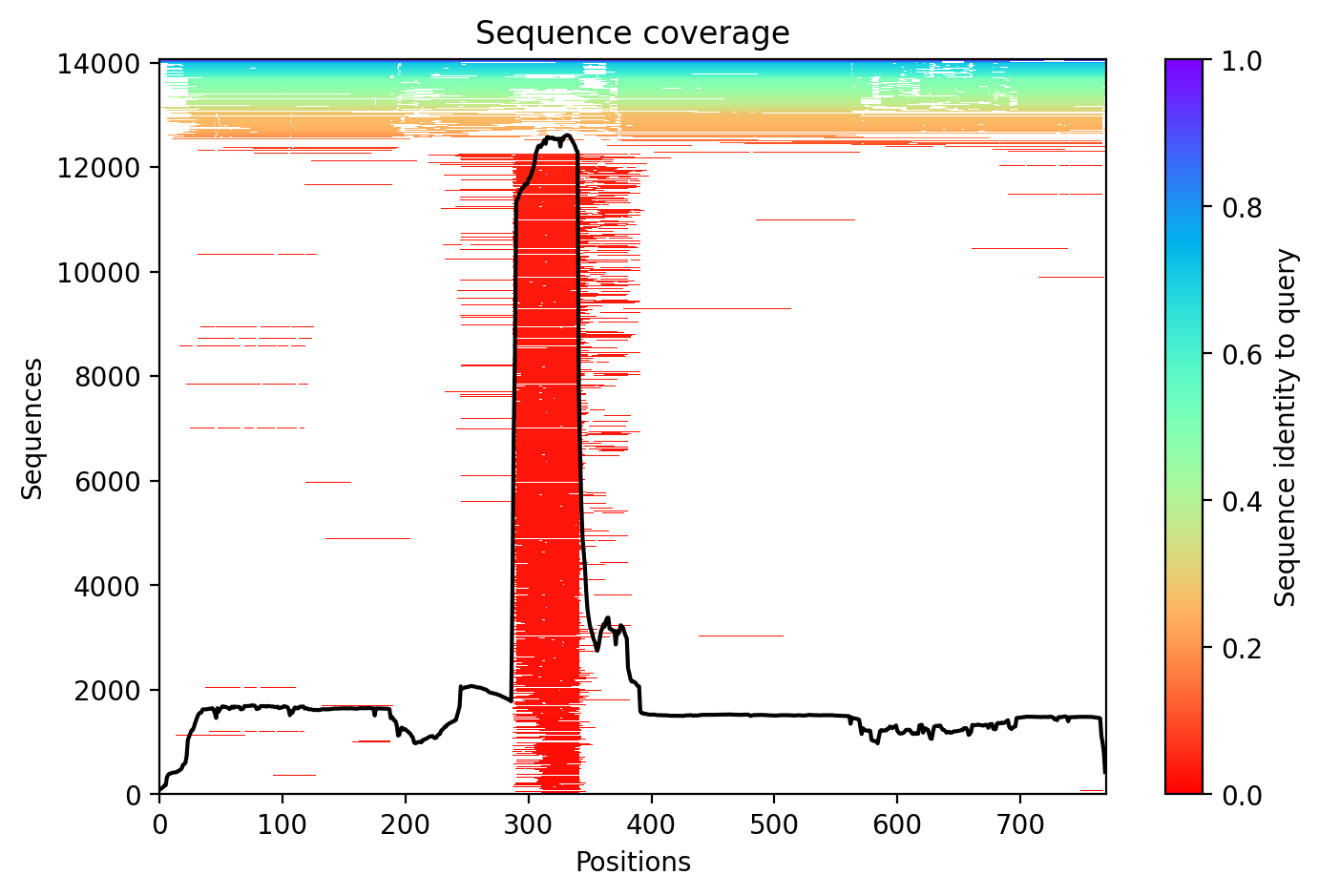
Sequence coverage plot
Predicted Aligned Error (PAE) plot
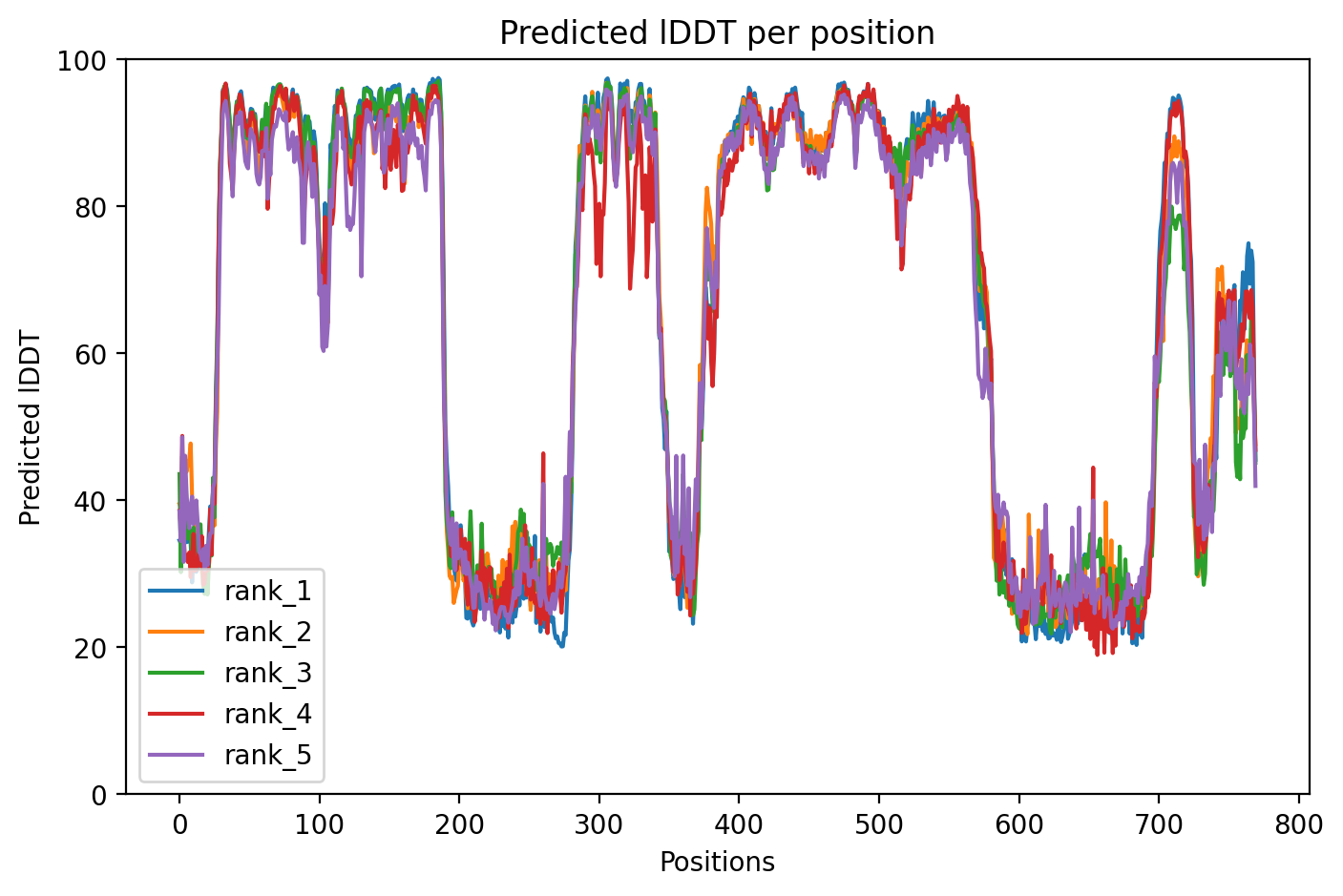
pLDDT confidence plot

05/Domain Annotations

Structural Domains & Regions

residues 28–189 Domain — E1
residues 291–341 Domain — BPTI/Kunitz inhibitor
residues 374–565 Domain — E2
residues 28–123 Region — GFLD subdomain
residues 131–189 Region — CuBD subdomain
residues 194–284 Region — Disordered
residues 391–423 Region — Heparin-binding
residues 491–522 Region — Heparin-binding
residues 523–540 Region — Collagen-binding
residues 695–722 Region — Interaction with PSEN1
residues 732–751 Region — Interaction with G(o)-alpha
residues 756–770 Region — Required for the interaction with KIF5B and for anterograde transport in axons
residues 344–365 Motif — OX-2
residues 724–734 Motif — Basolateral sorting signal
residues 757–762 Motif — YENPXY motif; contains endocytosis signal
residues 194–207 Compositional bias — Acidic residues
residues 228–264 Compositional bias — Acidic residues
residues 268–281 Compositional bias — Low complexity

Functional Sites

residues 96–110 Binding site
residue 147 Binding site
residue 151 Binding site
residue 168 Binding site
residue 183 Binding site
residue 186 Binding site
residue 187 Binding site
residue 677 Binding site
residue 681 Binding site
residue 684 Binding site
residue 685 Binding site

Binding Partners

BACE1 (11 experiments)
APBB1 (10 experiments)
NGF (9 experiments)
PNP (9 experiments)
ACTB (8 experiments)
APBB3 (8 experiments)
APOA1 (8 experiments)
ATXN1 (8 experiments)
HSPA8 (8 experiments)
LRPPRC (8 experiments)

Gene Ontology

amyloid-beta complex GO:0106003 astrocyte projection GO:0097449 axon GO:0030424 cell surface GO:0009986 clathrin-coated pit GO:0005905 cytoplasm GO:0005737 cytosol GO:0005829 dendrite GO:0030425 dendritic shaft GO:0043198 dendritic spine GO:0043197 early endosome GO:0005769 early endosome membrane GO:0031901 endoplasmic reticulum GO:0005783 endoplasmic reticulum lumen GO:0005788 endosome GO:0005768 +110 more

06/Structural Caption

APP V717F (London mutation) fold showing moderate confidence (66.6 pLDDT) with mutation positioned in the PSEN1 interaction region critical for pathogenic Abeta production.

Average pLDDT of 66.6 with 56% high-confidence residues indicates moderate overall prediction quality. Disordered region (residues 194-284) and acidic/low-complexity segments (residues 194-281) show reduced confidence as expected for intrinsically disordered sequences.

Structured domains E1 (28-189), BPTI/Kunitz inhibitor (291-341), and E2 (374-565) likely correspond to high-confidence regions. The long disordered linker (194-284) separates E1 from the Kunitz domain. The V717F mutation site falls within the PSEN1 interaction region (695-722), suggesting structural importance for gamma-secretase processing.

The V717F mutation (London mutation) occurs at a critical position within the APP transmembrane region near the gamma-secretase cleavage site, likely altering the cleavage pattern and increasing production of longer, more amyloidogenic Abeta peptides associated with familial Alzheimer's disease.

07/Peptide Therapeutics

Aggregation Analysis

Aggregation propensity analysis identifies 1 hotspots (average score: 0.00) using Pawar+KyteDoolittle+charge algorithm.

Residues 688–692 (0.56)

08/Known Inhibitors

Known Binders from ChEMBL

CHEMBL74704 Ki: 0.11 nM (pChEMBL 9.96)

CHEMBL74704

CHEMBL76112 Ki: 0.13 nM (pChEMBL 9.89)

CHEMBL76112

CHEMBL300172 Ki: 0.14 nM (pChEMBL 9.85)

CHRYSAMINE G

CHEMBL300172 Ki: 0.14 nM (pChEMBL 9.85)

CHRYSAMINE G

CHEMBL292910 Ki: 0.17 nM (pChEMBL 9.77)

CHEMBL292910

CHEMBL305634 Ki: 0.19 nM (pChEMBL 9.72)

CHEMBL305634

CHEMBL74348 Ki: 0.27 nM (pChEMBL 9.57)

CHEMBL74348

CHEMBL300172 Ki: 0.4 nM (pChEMBL 9.4)

CHRYSAMINE G

CHEMBL292910 Ki: 0.8 nM (pChEMBL 9.1)

CHEMBL292910

CHEMBL55401 Ki: 0.8 nM (pChEMBL 9.1)

CHEMBL55401

09/Candidate Peptides

De Novo Peptide Design Pipeline

Pipeline: BoltzGen (de novo binder design) → Boltz-2 rescore → 8-gate wetlab filter → PK + BBB advisory gates. Target site selected from UniProt curated annotations, P2Rank pocket prediction, and aggregation propensity (in that priority order). Advisory gates annotate each candidate with estimated serum half-life, renal/immunogenicity risk, and (for CNS targets) a recommended blood-brain-barrier shuttle conjugation — without silently dropping designs.

Loading candidate statistics...

Sequences are withheld pending IP review. Full candidate data (sequences, scores, CIF files) is available to authorized reviewers via the /api/private/candidates/{fold_id} endpoint with X-Private-Key.

Legacy candidates (charge-complementary)

Target Region

Residues 688–692 (0.56 aggregation score)

Candidate ID

CP-APP-001 (7 residues · computational design)
âš  Drug-likeness concerns Stability: medium | Toxicity: low
t½ ≈ 2 min renal high ⚙ mods suggested 🧠 Glutathione conjugate 👃 intranasal option

10/Agent Findings

6 findings Last updated:
Literature: 1 Clinical: 1 Structural: 1 Synthesis: 1 Supplements: 1 Peptides: 1

Literature Agent (1)

Literature Agent

None of the provided papers are relevant to the APP V717F variant associated with Alzheimer's disease. The papers cover topics including wearable ground reaction force measurement, maternal iron deficiency, pain distribution, diabetes risk factors, frailty, cognitive assessment implementation (general AD/ADRD research infrastructure, not specific variants), Mendelian randomization methodology, food delivery services, rheumatic heart disease screening, medical procedures, medicinal plants, screen time and depression, soccer injury biomechanics, intracerebral hemorrhage care, oxytocin trials, and lead exposure. None examine the specific APP V717F mutation, amyloid precursor protein variants, familial Alzheimer's disease genetics, or related molecular mechanisms.

Clinical Agent (1)

Clinical Agent

No summary available

Structural Agent (1)

Structural Agent

AlphaFold structure update: Baseline check: 11 structure(s) found

Supplements Agent (1)

Supplements Agent

Found 50 clinical trials for APP V717F (20 recruiting). Also found 20 relevant preprints.

Synthesis Agent (1)

Synthesis Agent

Synthesis of 5 findings (clinical, literature, peptides, structural, supplements): The APP V717F variant, a known causative mutation in familial Alzheimer's disease, shows a developin...

Peptide Agent (1)

Peptide Agent

APP V717F: 10 known binders (top: 0.1 nM); 1 candidate peptides designed