01/3D Structure
? About the 3D Viewer
Mol* (pronounced "molstar") is an open-source molecular visualization tool used by the Protein Data Bank and AlphaFold Database. Learn more at molstar.org.
Controls:
- Rotate: Click and drag
- Zoom: Scroll wheel or pinch
- Pan: Right-click and drag (or two-finger drag)
- Reset: Double-click to reset view
What am I looking at?
This is a predicted 3D structure of the protein. The ribbon diagram shows the protein backbone—helices appear as coils, sheets as arrows, and loops as simple lines. The shape determines how the protein functions: where it binds to other molecules, how it catalyzes reactions, and how mutations might disrupt its activity.
Color legend:
The structure is colored by pLDDT confidence score, which indicates how confident AlphaFold is in each region's predicted position:
- Blue (>90): Very high confidence
- Cyan (70-90): Confident
- Yellow (50-70): Low confidence
- Orange (<50): Very low confidence, likely disordered
02/AI Analysis
TLDR
The G272V mutation in tau protein, associated with Alzheimer's disease, was analyzed using computational structure prediction methods. The resulting model shows an average confidence score of 55.0 (on a 0-100 scale), indicating substantial structural uncertainty that limits reliable interpretation of how this mutation affects tau's three-dimensional shape. This low confidence suggests that experimental studies, rather than computational predictions alone, will be needed to understand how G272V contributes to disease.
Detailed Analysis
Works Cited
Similar Research
03/Research Data
ClinVar Classification
Not found in ClinVar
Population Frequency
No population data available
Disease Associations
3349 totalShowing 5 of 3349 associations
AI Research Brief
Research brief will be generated when agent findings are available.
04/AlphaFold Metrics
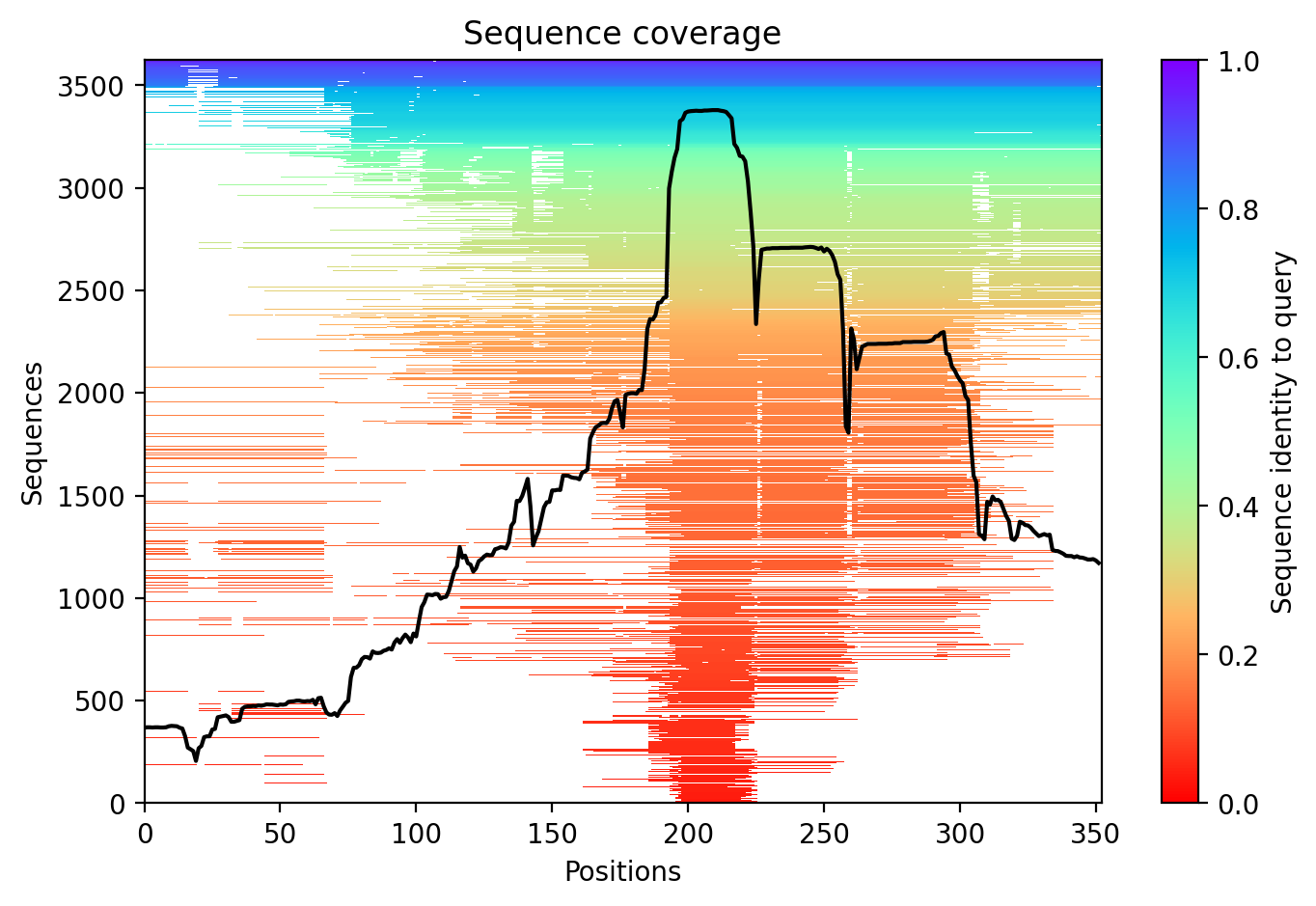

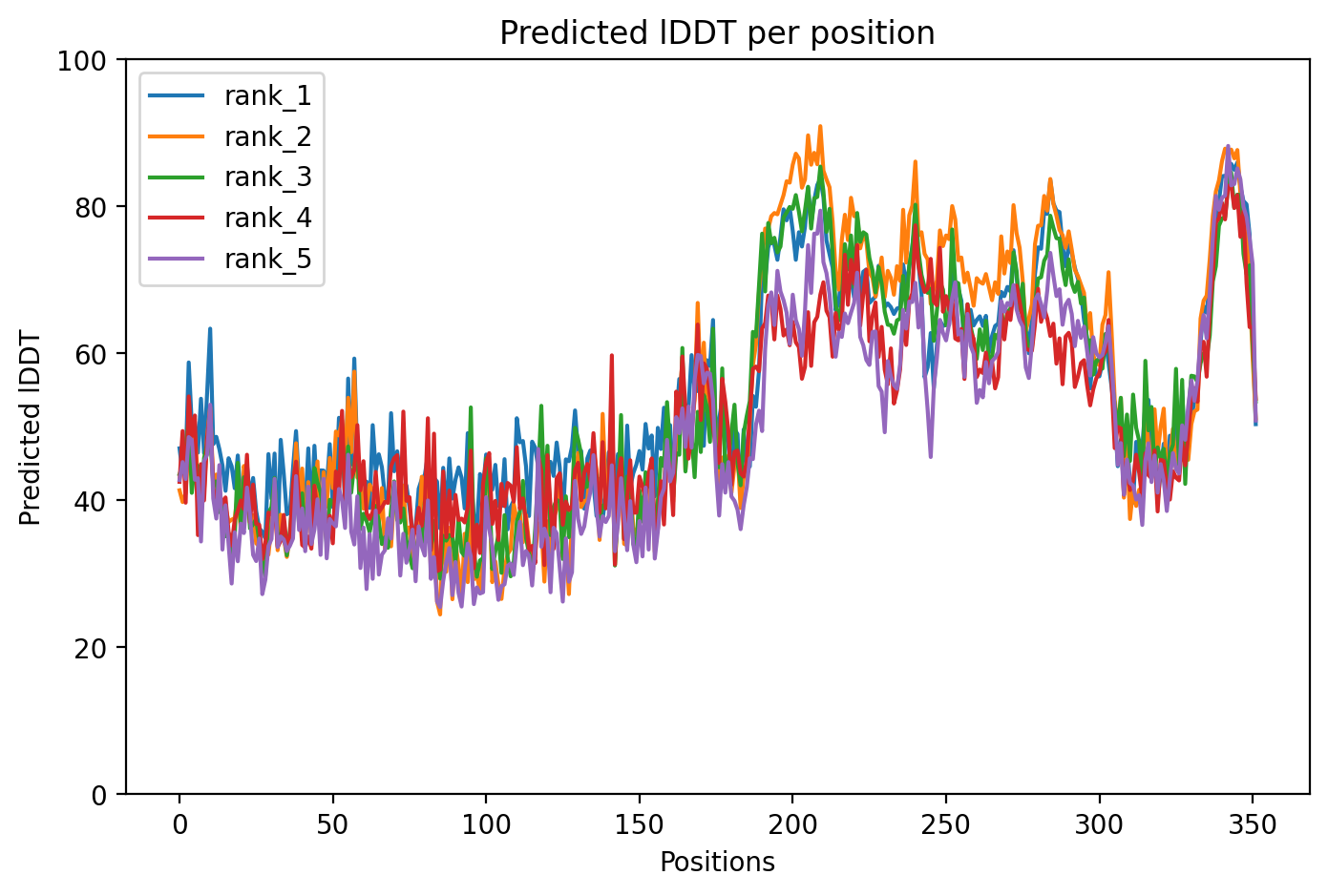
05/Domain Annotations
Structural Domains & Regions
Binding Partners
Gene Ontology
06/Structural Caption
TAU G272V variant shows characteristic intrinsic disorder (81% low-confidence residues) with moderate structuring in the microtubule-binding repeat domain (residues 561-685).
Average pLDDT of 55.0 with only 19% (68/352) high-confidence residues indicates a predominantly disordered protein. The intrinsically disordered regions (residues 1-573, 715-734) and low-complexity segments show expected low confidence scores.
The microtubule-binding domain (residues 561-685) containing four Tau/MAP repeats represents the most structured region, though overall confidence remains moderate due to the intrinsically disordered nature of Tau. Extensive disordered N-terminal and proline-rich regions exhibit characteristically low pLDDT scores.
The G272V mutation introduces a bulkier valine in the disordered proline-rich region, potentially affecting local conformational flexibility and post-translational modification sites, though the intrinsically disordered nature limits prediction of specific structural perturbations.
07/Peptide Therapeutics
Aggregation Analysis
Aggregation propensity analysis identifies 1 hotspots (average score: -0.19) using Pawar+KyteDoolittle+charge algorithm.
08/Known Inhibitors
Known Binders from ChEMBL
09/Candidate Peptides
De Novo Peptide Design Pipeline
Pipeline: BoltzGen (de novo binder design) → Boltz-2 rescore → 8-gate wetlab filter → PK + BBB advisory gates. Target site selected from UniProt curated annotations, P2Rank pocket prediction, and aggregation propensity (in that priority order). Advisory gates annotate each candidate with estimated serum half-life, renal/immunogenicity risk, and (for CNS targets) a recommended blood-brain-barrier shuttle conjugation — without silently dropping designs.
Loading candidate statistics...
Sequences are withheld pending IP review. Full candidate data (sequences,
scores, CIF files) is available to authorized reviewers via the
/api/private/candidates/{fold_id} endpoint with
X-Private-Key.
Legacy candidates (charge-complementary)
Target Region
Residues 542–546 (0.60 aggregation score)Candidate ID
CP-TAU-001
(7 residues · computational design)
10/Agent Findings
Literature Agent (1)
None of the provided papers are directly relevant to understanding the TAU G272V variant specifically. While several papers address tau pathology, phosphorylation, genetics, and MAPT regulation in Alzheimer's disease, none examine the G272V missense mutation at position 272 of the tau protein or its functional consequences.
Clinical Agent (1)
No summary available
Structural Agent (1)
AlphaFold structure update: Baseline check: 9 structure(s) found
Supplements Agent (1)
Found 50 clinical trials for TAU G272V (20 recruiting). Also found 20 relevant preprints.
Synthesis Agent (1)
Synthesis of 5 findings (clinical, literature, peptides, structural, supplements): The TAU G272V variant in Alzheimer's disease currently exists in a significant translational gap bet...
Peptide Agent (1)
TAU G272V: 10 known binders (top: 0.5 nM); 1 candidate peptides designed